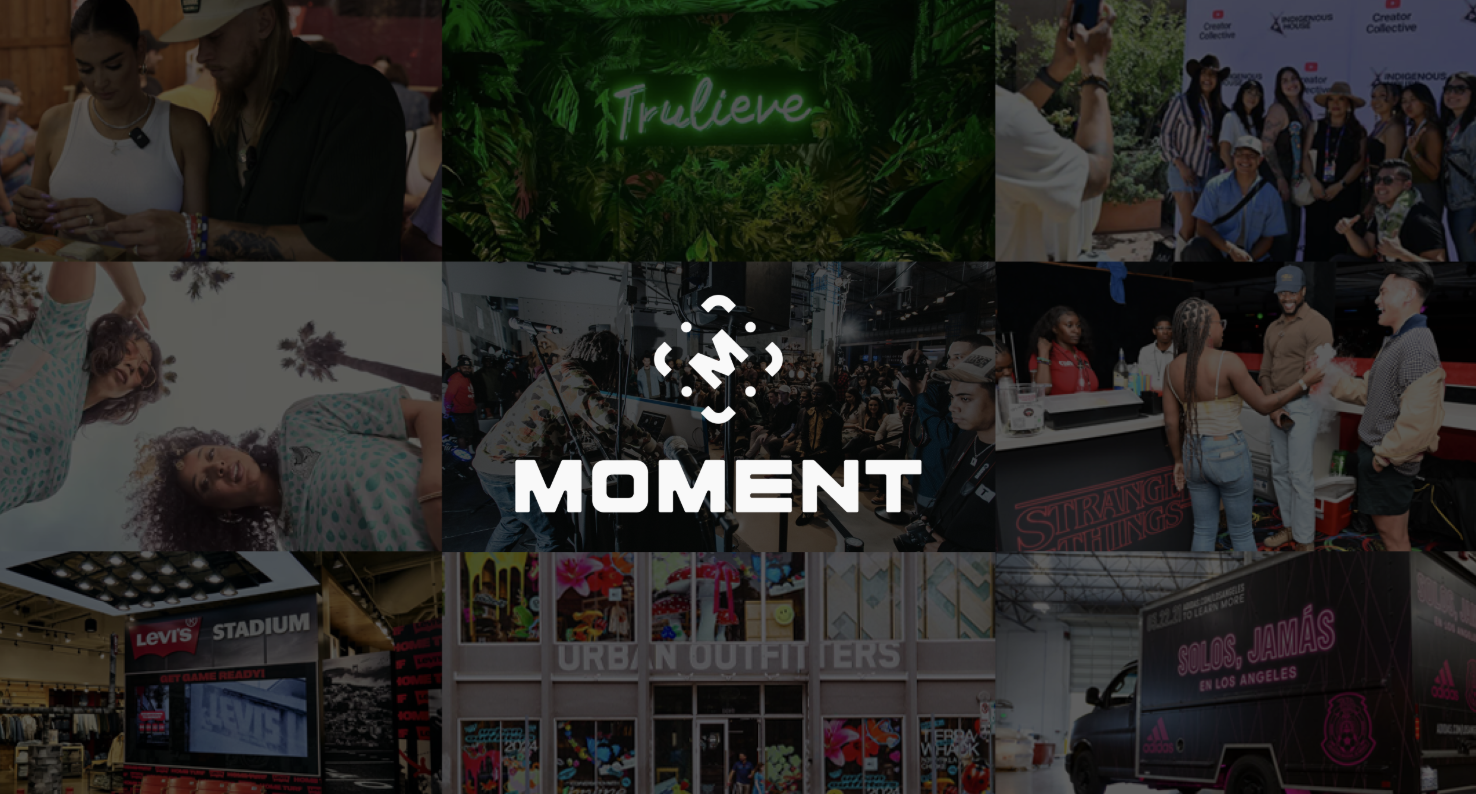
We elevated Moment’s brand to make the way we show up better reflect the agency we are. Our identity needed to express the creativity and care behind our work, help the right partners understand us, and support the opportunities we want to pursue next.
The starting point was honest. We valued the simplicity of our existing brand, but it felt more corporate and reserved than the people behind it. Our discovery process gave us a clear direction: keep the clarity, bring forward the personality, and make our difference easier to recognize.
A reason to evolve
A brand lift earns its place when there is a gap between what a business delivers and what people understand about it. That can happen when capabilities expand, audiences change, or the identity no longer expresses the quality of the work. The first task is to identify that gap and preserve the assets people already recognize.
Kantar’s analysis of 1,313 brands found that those with stronger perceived Difference were twice as likely to grow as those with weaker Difference. [1] This supports a clear priority: give people a relevant reason to distinguish one brand from another. The research shows an association with growth, rather than proof that a redesign produces it.
Recognition takes intention
A new identity needs to be recognizable in use. Research from Ipsos and Jones Knowles Ritchie found that only 15% of tested brand assets achieved its Gold standard for distinctiveness. [2] For a brand activation agency, that makes consistency a creative responsibility. The visual cues people see online should carry into the environment, the content and the takeaway.
Our brief captured the personality we wanted to express as “fun, but polished.” That means approachable and energetic, with the confidence clients expect from a partner responsible for bringing their brand into the world. It also means a direct voice and a simple path to understanding our work.
Translating personality into design
That balance of energy and polish shaped the visual system. Our custom logotype uses strong, evenly weighted letterforms with subtly rounded edges, giving the name presence while keeping it approachable. The stacked logo, logotype and standalone mark give us flexibility across formats, with consistent geometry tying each expression back to Moment.
The monogram carries that thinking further. An “M” drawn from the logotype sits inside a rounded frame that references both the precision of a blueprint and the focus of a camera viewfinder. Circular elements introduce an “O” that pairs with the “M” from any direction. That rotational structure lends itself to animation, expressing the energy, grit and pace behind our work.
Color gives that energy a clear purpose. Our Pulse Spectrum palette grounds the identity in black, white and shades of gray, leaving room for the work itself to lead. Moment Lime, supported by Signal Cyan and Electric Magenta, brings emphasis to selected details and moments of interaction. In select CTA hover states, those secondary colors blend into a gradient that adds movement as people engage.
Typography follows the same logic. Expanded Archivo headlines bring confidence, Archivo Regular keeps longer copy readable, and TBJ Interval gives smaller labels and subheadings a distinct role. A dedicated icon set makes our capabilities easier to navigate, representing experiential, brand activation, retail, strategy and content. Together, these elements give the brand personality and structure at every scale.
Making every introduction feel connected
The system is designed to move between digital and physical experiences. On the website, animated logos, icons and video bring the studio’s energy into the first introduction. A largely monochromatic interface gives the projects space, while moments of color guide interaction.
Physical touchpoints carry the same intent. The business card design pairs a raised spot UV monogram and Moment Lime with natural textured white cardstock, making the identity tactile. Studio signage gives the mark and service descriptor a clear hierarchy. On apparel, the same lime becomes an accent, and the icons become smaller details. Each application has its own expression while building recognition through shared visual cues.
Trust belongs in the experience
Edelman’s 2025 research found that 88% of respondents considered trust important or a deal breaker when choosing brands to buy or use. [3] An elevated identity can communicate intent. The experience has to make that intent credible. For Moment, transparency, thoughtful collaboration and dependable execution belong in the same story as the creative.
The opportunity for activation agencies
Live experiences give that story a physical form. In Freeman’s 2025 Trust Report, 95% of surveyed professional event attendees said they trusted brands more after an in-person event. [4] A separate Freeman study found that 96% of surveyed attendees agreed hands-on experience made it easier to advocate for a product or service purchase. [5] These business-event findings offer useful direction for activation planning, rather than universal forecasts for retail or consumer events.
Our takeaway is to build the experience around something people can understand through participation. A demonstration can make a benefit tangible. A styling session can help someone find a product that feels right. Customization can give them a personal connection to what they take home. The activity should make the brand’s value easier to experience.
A stronger brief produces a clearer experience
For activation agencies, the practical starting point is the audience. What do we want someone to understand, feel or do? That answer should shape the concept and the interaction. It should also explain why this particular brand is the right one to deliver the experience.
Clear instructions and manageable queues help people take part. Staff need to answer questions confidently. Follow-up should build on the interaction that prompted it. An agency’s own proposals, website and case studies deserve the same consistency.
Measurement gives the ambition a test
A full space tells us people arrived. The objective determines what else we need to know. If the goal is recognition, measure brand recall. If it is consideration, measure the intended perception shift and meaningful product interactions. If it is action, track qualified inquiries, redemptions or purchases within an agreed window.
Set the baseline and define the measurement approach before launch. Use consistent survey questions and a comparison group where feasible. Keep stated purchase intent separate from actual sales, and distinguish tracked conversions from evidence that the activation caused them. This gives teams a clearer account of what worked and what to improve.
What this means for Moment
Moment began in 2015 with the ambition to create a better agency experience. Our brand lift carries that ambition forward. We want to take on more impactful work and build broader recognition while protecting the people-first culture that makes the work rewarding.
The goal is a brand that helps people understand our capabilities, recognize our perspective and feel confident starting a conversation. From the geometry of the mark to the way a button responds, each design decision supports that introduction. We are applying to ourselves the same care we bring to the experiences we create for others.
Have something in mind? Let’s make a Moment.
Sources
[1] Kantar BrandZ. Imbuing brands with a sense of difference
Analysis of 1,313 brands over three to four years. Observational association between perceived Difference and growth.
[2] Ipsos and JKR. Be Distinctive. Everywhere. (2023)
Five asset types tested with more than 26,000 respondents globally. The 15% finding refers to tested assets, not brands.
[3] Edelman. 2025 Trust Barometer Special Report: Brand Trust, From We to Me
Page 13. Fifteen-market average; question asked of half the sample. Total study n=15,042. Fieldwork April 24 to May 5, 2025.
[4] Freeman and The Harris Poll. 2025 Freeman Trust Report
Pages 3 and 16. Survey of 1,824 U.S. professionals aged 18 to 59 with recent business-event attendance, September 10 to 22, 2024.
[5] Freeman. Unpacking XLNC: The future of commerce for trade shows and conferences (2025)
Page 19. Attendee study n=1,022, 90% U.S.; conferences and trade shows. Agreement about hands-on experience, not verified sales.
Moment discovery materials
designed_output(1).pdf, questionnaire completed by Luke, pages 1 to 5. moment_deck_figma_import.pdf, discovery synthesis, pages 2 to 14. These establish the rationale and intended direction of the lift. They do not report post-launch results. Design rationale and touchpoint descriptions are drawn from Moment-Brand-Refresh-Blog 2.docx; they describe the identity system and its intended applications.
Research scope
The external studies address consumer brands or professional events. Their application to Moment is a strategic interpretation. Brand elevation should respond to a demonstrated business need, with outcomes measured after implementation.