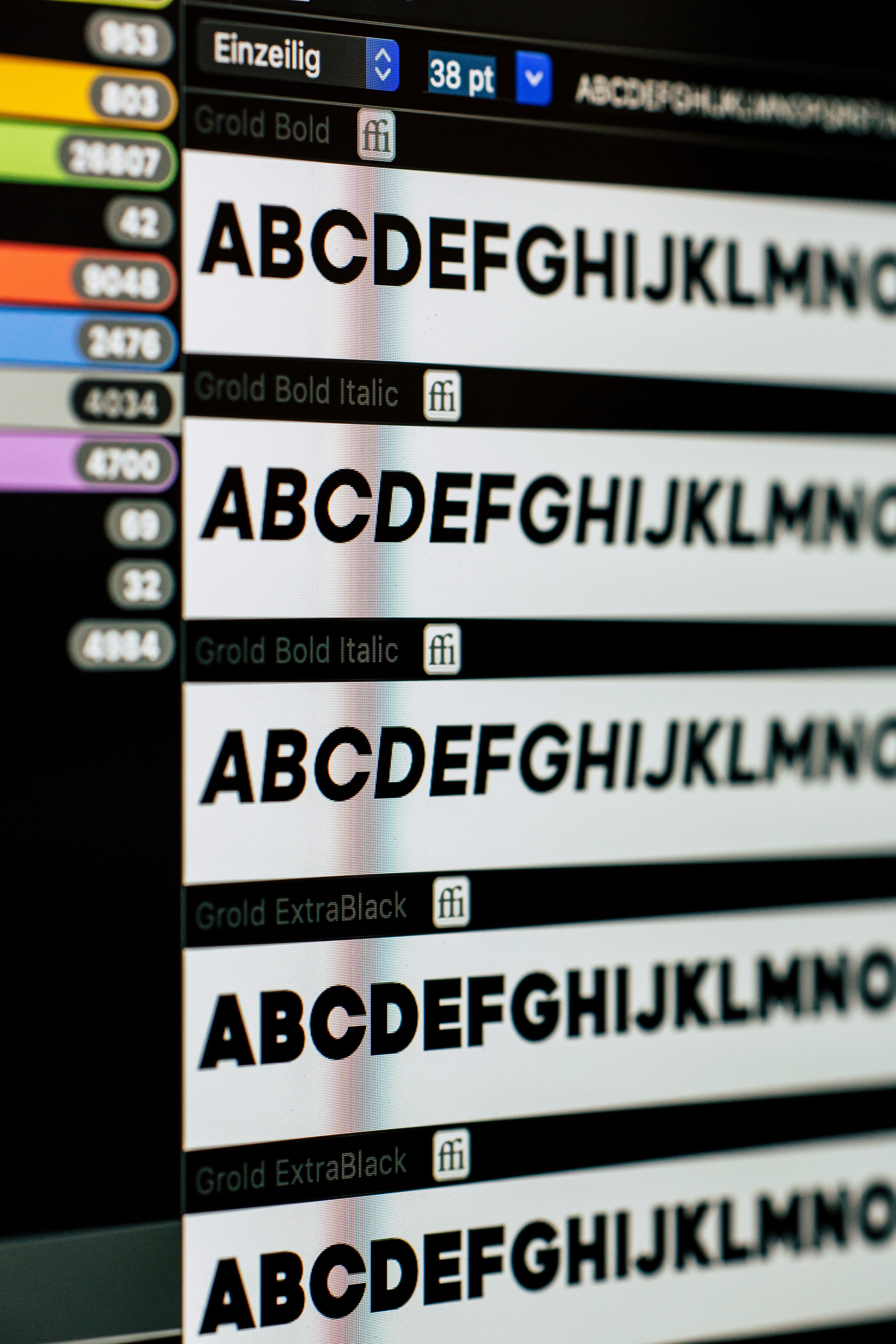
In experiential design, it’s easy to focus on the big, visible moments—large builds, immersive environments, lighting, motion.
But underneath all of that, there’s something quieter doing just as much work.
Typography.
Not as decoration, but as infrastructure.
It’s the thing organizing information, guiding people through space, and shaping how everything is understood in real time. And in physical environments—where attention is limited and everything is competing at once—those decisions matter a lot more than they do on a screen.
Designing for Movement
Most design work assumes people are relatively still. Experiential is the opposite.
People are moving, glancing, half-paying attention. They’re taking things in quickly, often without even realizing it. They’re not reading in a traditional sense—they’re scanning and reacting.
That’s where typography comes in.
It quietly answers questions people didn’t even know they had: What is this? Where do I go? What should I pay attention to first?
When it’s working, everything feels intuitive. When it’s not, you can feel the friction almost immediately.
Scale Changes Everything
There’s a big difference between something that works in a deck and something that works in a physical space.
Type that feels balanced on a laptop can suddenly feel too small, too tight, or completely lost once it’s translated onto a wall or built into an environment. Lighting shifts, materials affect legibility, and distance changes how everything is perceived.
It forces you back to the fundamentals—spacing, weight, contrast, proportion—but with a different level of responsibility. You’re not just designing something to look good. You’re designing something that has to hold up in the real world.
In that sense, typography becomes less of a layer and more of a structural element. It’s part of how the space actually functions.
Clarity Isn’t the Opposite of Creativity
There’s often a misconception that clarity limits creativity. In reality, it’s what allows creative ideas to land.
In a busy environment, where multiple messages are competing for attention, typography is what brings order to the chaos. It helps people understand what matters without having to think too hard about it.
And when that foundation is solid, it actually creates more room to push things visually. You’re not sacrificing clarity—you’re building on top of it.
A Shared Understanding Goes a Long Way
One thing that’s become more obvious in a fast-moving agency environment is how valuable it is when everyone has at least a baseline understanding of design fundamentals.
Not just designers.
When people across strategy, production, and spatial teams have a feel for typography—even at a basic level—conversations get easier. Feedback becomes more specific. Ideas come together faster.
There’s less translation needed between disciplines, which means less friction overall.
Making It Click
We recently spent some time walking through typography as a team. Instead of treating it like a traditional presentation, we approached it more like a series of quick exercises—looking at real scenarios, making fast decisions, and talking through what worked and what didn’t.
It made the whole thing feel a lot more approachable.
And pretty quickly, you could see it showing up in the work. Layouts felt more intentional. Hierarchy started to click. Conversations around design got sharper without getting heavier.
That’s usually the sign that something stuck.
From Learning to Application
That shared foundation naturally carried into the work we’re doing now.
As we’ve been building out brand guidelines for upcoming client pitches, typography has been one of the first things we’ve locked in—not just from a visual standpoint, but as a system.
Because in experiential, it has to stretch. It needs to work across signage, environments, digital touchpoints—sometimes all at once—and still feel consistent.
When that system is clear, everything else starts to move a little more smoothly.
Why It Matters
At the end of the day, typography isn’t just about how something looks.
It’s about how people understand a space. How they move through it. How they connect with what’s in front of them.
It’s not always the most noticeable part of the experience.
But it’s often the thing holding everything together.