
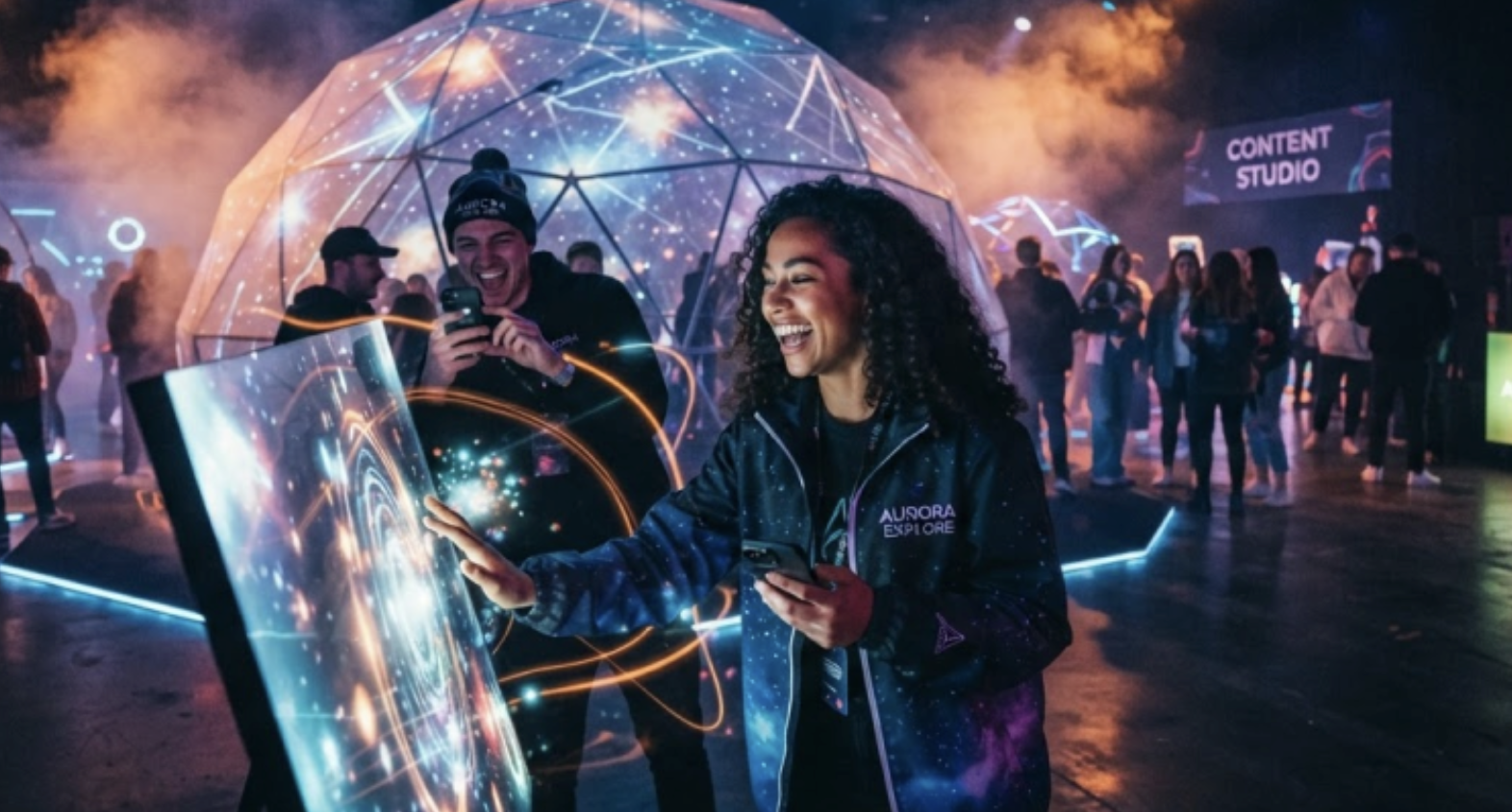
Designing brand experiences people want to be part of.
The space looks great. People stop. Phones come out. The brand has their attention.
What happens next?
That question deserves as much consideration as the environment itself. Once someone steps into an activation, every detail helps shape whether they understand the experience, feel comfortable joining, and find a reason to stay.
At Moment, our point of view is simple: what people do inside a brand experience should be as thoughtfully designed as what they see. Participation belongs in the initial concept and in every decision that brings it to life.
A useful place to start is the guest’s role. Are they making something personal? Discovering something unexpected? Trying a product in a way they couldn’t online? Their role gives the experience a purpose they can understand and a reason to make it their own.
There’s research that supports giving guests a say in their experience. In Freeman’s 2025 Trust Report, 90% of surveyed working professionals wanted a variety of event content and control over their experience. The research focused on business and professional events, so it offers directional context for consumer activations. For us, it raises a useful design question: where can guests make choices that matter to them? Source: Freeman’s 2025 Trust Report
Those choices can be simple. Picking a color. Choosing a route through a space. Selecting a design that says something about their style. The opportunity is to connect that decision to the brand and give people a satisfying way to act on it.
Imagine a denim customization studio. This is an illustrative concept, but it shows how participation can shape an activation from the first impression to the trip home.
A guest arrives, finds a garment they like, and chooses a detail that makes it theirs. The product sits at the center of the activity. They handle the fabric, explore the fit, and think about how they’ll wear it. Customization creates a reason to spend time with the garment, while the garment gives the activity its meaning.
That relationship deserves attention in any activation. A sampling experience can help someone discover a flavor. A styling session can show them a new way to wear a familiar piece. A product demonstration can let them feel a feature working. The activity should give guests something useful to learn or experience about the brand.
The invitation matters just as much as the activity. Before someone commits, they need to understand what’s happening and where to begin. Visible samples can explain the outcome. A clear entrance can make the first step obvious. A host can answer the small questions that keep someone hovering at the edge of a space.
In the denim studio, that could mean displaying finished examples where people can see them before entering. Guests can quickly understand what they’ll make and decide whether it’s for them. A short menu explains the options, while a realistic time estimate helps them fit the experience into their day.
People also arrive with different levels of confidence. Some want to jump in. Others want to watch first or ask a question privately. A welcoming experience makes room for those differences. It lets guests find a comfortable way to participate without asking everyone to perform for an audience.
Then there’s the part of experiential design that rarely makes the hero rendering: the wait.
Waiting affects how an activation feels. It deserves its own creative and operational thinking. In our studio example, guests could browse designs and choose their customization before reaching the worktable. Watching an artist work gives them something interesting to follow. A separate pickup point helps people collect their finished piece without interrupting the next guest.
These decisions require testing against real capacity. How long does each interaction take? How many people can the team serve? What happens when demand increases? The answers shape the layout and staffing plan, and they help protect the experience the concept promises.
The final interaction deserves the same care. A thoughtful handoff gives guests a moment to appreciate what they made. Care instructions help them keep it looking good. Styling ideas can give them another reason to wear it. If they choose to hear from the brand again, future workshops or relevant product updates can continue the relationship.
The question is what would be useful after the event. That gives the takeaway and any follow-up a purpose beyond the day itself.
It also brings us back to the brand’s objective. Participation should have a clear connection to what the activation needs to achieve, and the measurement plan should reflect that connection.
If the goal is product consideration, track how many people try the product and what they say afterward. If the goal is an ongoing relationship, look at voluntary sign-ups and subsequent engagement. If the goal is sales, establish how purchases or redemptions will connect back to the experience. Participation and completion rates can help reveal where the journey works and where people drop away.
A crowded space tells you that people showed up. Understanding what they did, how they felt, and what happened afterward gives the team a more useful picture of the activation’s performance. Those measures need clear definitions from the start, and engagement alone cannot establish a sales impact.
For Moment, participation is a design decision. It influences the creative idea, the environment, and the practical details that determine how the day unfolds. The opportunity is to make those decisions work together, so guests can move naturally from noticing the brand to experiencing something with it.
That’s what we mean by made to join in: an experience with a clear invitation and a meaningful place for the people who show up.
Let’s Make A Moment.